Costume Secrets: 150 Years of Dressing The Nutcracker

The Messenger · 2026-04-05
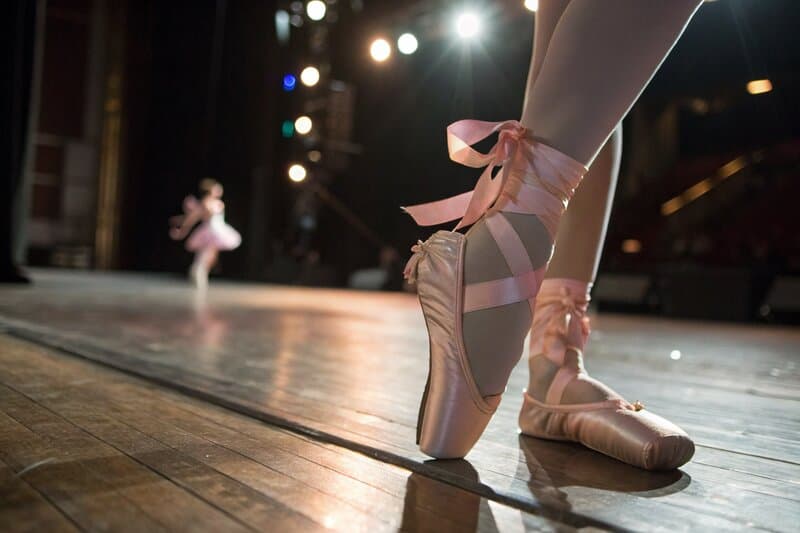
A tutu is not a skirt.
This is the first thing to understand. A tutu is architecture. It is engineered to create a specific visual effect -- the illusion that a human body extends into a disc of light at the hips, transforming the silhouette from vertical to radial, from person to geometry. The classical tutu, the short flat one that projects outward like a satellite dish, uses between ten and twelve layers of tulle, each cut to a slightly different diameter and tacked to a basque -- a fitted bodice that sits at the waist and distributes the weight across the hips.
When the Sugar Plum Fairy turns, the tutu catches the light across its entire surface simultaneously. This is by design. The flat tutu is, functionally, a reflector -- a wearable stage light that makes the dancer visible from every angle in the house, including the upper balcony where a body in a simple leotard would disappear into the distance.
In 1892, at the premiere of The Nutcracker in the Mariinsky Theatre in St. Petersburg, the original Sugar Plum Fairy -- Antonietta Dell'Era, an Italian ballerina with a notably strong technique but a physique that the St. Petersburg critics found too robust -- wore a tutu made of silk and tulle, heavily embellished with metallic thread and paste jewels. Photographs from the era, or more precisely the painted illustrations and sketches that served as photography's supplement, show a costume of considerable weight and volume. The silhouette is wider, stiffer, more armored than what modern audiences expect.
This was the aesthetic of the Imperial Russian Ballet: opulence as statement. The body was dressed not to reveal technique but to project status. The costumes said: this is an institution with resources, with taste, with the backing of the Tsar himself. The dancer existed inside the costume the way a jewel exists inside a setting.
The Evolving Silhouette
The first major shift in Nutcracker costuming came not from a designer but from a choreographer.
George Balanchine, who had danced as a child in the original Mariinsky production and who carried the ballet with him when he emigrated to America, reimagined The Nutcracker for his New York City Ballet in 1954. His aesthetic convictions were clear: the body is the instrument, and the costume must serve the body, not compete with it.
Balanchine worked with the designer Karinska -- Barbara Karinska, born Varvara Zhmoudsky in Kharkov, Ukraine, who had fled to Paris after the Russian Revolution and eventually settled in New York. Karinska is widely credited with revolutionizing ballet costuming in the 20th century. Her key innovation was the "powder puff" tutu -- shorter, softer, and lighter than the Imperial Russian model, constructed with layers of tulle that were individually hand-tacked to create a softer, more organic shape. The Karinska tutu moved with the dancer rather than around her. It did not project the rigid disc of the classical tutu but a softer, more cloud-like volume that responded to the body's momentum.
For The Nutcracker, Karinska designed costumes that balanced Balanchine's desire for clarity with the theatrical demands of a story ballet. The Sugar Plum Fairy's costume was lavender and silver -- a palette that would become iconic. The snowflakes wore white tutus with silver embellishment. The divertissement characters -- the Spanish dancers, the Arabian dancers, the Chinese dancers, the Russian dancers -- wore costumes that suggested their national origins through color, silhouette, and ornament without descending into caricature. Though it must be said that the standard of what constituted caricature in 1954 was considerably broader than it is today.
Karinska's costumes for the NYCB Nutcracker set a template that hundreds of subsequent productions borrowed, adapted, or directly copied. The lavender Sugar Plum. The white snowflakes. The red-and-gold Chinese dancer. The harem-pant Arabian. These became the default visual vocabulary of the American Nutcracker, and they persist, in modified form, to this day.
Fabric as Character
Each character in The Nutcracker requires a costume that communicates something specific to the audience before a single step is danced. This is the costume designer's primary task: to make the story legible through cloth.
Clara begins the ballet in a party dress -- typically pale pink or white, with a sash at the waist and a hem that falls below the knee. This costume must communicate innocence, youth, and the domesticity of the party scene. It must also accommodate the considerable physical demands of Act I, which include running, kneeling, and the low-to-the-ground movements of the battle scene. Stretch fabrics, concealed gussets, and reinforced seams are standard.
The Nutcracker Prince requires a military uniform that is visually impressive but functionally permissive. The traditional costume -- based loosely on Prussian military dress of the early 19th century -- includes a fitted jacket with epaulets, a sash or cross-belt, white trousers, and boots. The jacket must allow full arm extension for lifts and partnering. The trousers must permit deep plies and full splits. Modern productions typically use a stretch fabric for the trousers and a more structured fabric for the jacket, with hidden elastic panels at the shoulders and underarms.
Drosselmeyer's costume is the designer's opportunity for theatricality. He is typically dressed in a dark cloak, a tall hat or turban, and some form of eyepatch or monocle. The silhouette is deliberately different from every other character on stage -- taller, darker, more angular. Drosselmeyer exists outside the social world of the party, and his costume must signal this. Some designers give him a cape with a contrasting lining -- dark exterior, jewel-toned interior -- that he reveals during his more theatrical moments. The reveal is a costume trick as old as magic itself: the hidden interior suggests hidden depths.
The mice present a perennial design challenge. They must be visually coherent as an army, identifiable as mice, and constructed so that the dancers inside them can execute the battle choreography without overheating or losing visibility. The head is the critical component. Some productions use full mascot-style heads that enclose the dancer's face entirely; others use half-masks or headpieces that leave the jaw and neck exposed. The full-head approach is more visually striking but more physically demanding -- ventilation is poor, sightlines are limited, and the dancer must project through the costume rather than with it.
The Mouse King's costume is usually the most elaborate in the production. In Hoffmann's original story, the Mouse King has seven heads, each with its own crown -- a detail that most productions simplify to a single large head with a prominent crown, though some adventurous companies have attempted the full seven. The seven-headed Mouse King is a striking stage image. It is also a significant engineering project, requiring a head structure that distributes its weight evenly across the dancer's shoulders and upper back while allowing enough visibility and ventilation for a performer who must dance, fight, and die convincingly over the course of ten minutes.
The Divertissement Problem
Act II's divertissement dances -- the national character dances performed as entertainment in the Land of Sweets -- have become the site of The Nutcracker's most contested costuming decisions.
The original choreography and costuming for these dances drew on 19th-century European stereotypes of non-European cultures. The Chinese Dance featured coolie hats and mandarin robes. The Arabian Dance featured bare midriffs and harem pants. The Spanish Dance featured mantillas and tight bodices. These designs reflected the Orientalism that was standard in European theatrical design of the period -- a visual shorthand that reduced complex cultures to a handful of recognizable (and often caricatured) signifiers.
Modern productions have grappled with this legacy in various ways. Some have eliminated the national character dances entirely, replacing them with abstract variations. Others have retained the music but reimagined the choreography and costuming to remove specific cultural references. Some have commissioned research into the actual dance traditions of the cultures referenced and created costumes that reflect historical garments rather than theatrical stereotypes.
The Royal Ballet's production, redesigned by Peter Wright in 1984 and refreshed periodically since, took a relatively conservative approach -- retaining the national character framework but updating the costumes to be more historically informed and less cartoonish. The Pacific Northwest Ballet's Sendak-designed production replaced the national characters with characters from Sendak's own visual imagination, sidestepping the cultural question entirely.
There is no consensus. Each production makes a choice, and each choice is a statement about what The Nutcracker is for and whom it is meant to include. The costume is never just a costume. It is an argument about the present, dressed in the fabrics of the past.
What the Eye Remembers
I have seen dozens of productions, and I can tell you what stays.
Not the grand gestures. Not the Sugar Plum Fairy's tutu, which is beautiful but expected. Not the Mouse King's enormous head, which is impressive but designed to be. What stays is the detail. The things the designer included not because they would be noticed but because they would be felt.
The lace trim on Clara's party dress that catches the amber light of the party scene and turns gold. The way the Nutcracker Prince's sash is the same red as the ribbon on the Christmas tree -- a visual rhyme that the eye registers before the mind interprets it. The fabric flowers sewn into the Waltz of the Flowers tutus that are visible only from the first ten rows but that give the dancers something to believe in -- a commitment to the metaphor that extends all the way to the petals on the bodice.
In one production I will never forget, the snowflake headpieces were constructed from wire and crystal beads that trembled with every movement, catching the side light in tiny, unpredictable flashes. From the mezzanine, the effect was of a stage dusted with sparks. From the orchestra, you could see each individual bead swaying on its wire, each one moving to its own rhythm, each one a separate, tiny performance inside the larger performance.
That is what costume design is, at its best. Not clothing. Not decoration. A multiplication of the dance -- an additional layer of movement and light and meaning that exists on the body and extends the body's argument into the territory of the visual.
150 Years of Choices
From the heavy silk of the Mariinsky to Karinska's powder puff to the minimalist productions of the 21st century where a snowflake may wear nothing more than a white leotard and a dusting of glitter -- the arc of Nutcracker costuming is an arc of reduction. Each generation strips away a layer, asks what is essential, asks what the body needs and what the body is.
The early costumes said: the body is a mannequin for beautiful fabric.
Balanchine's costumes said: the body is the art, and the fabric is its frame.
Contemporary minimalist costumes say: the body is sufficient. The body, moving in light, is enough.
Each of these is true. Each of these is incomplete.
The costume is the place where the body meets the story. Where flesh meets fiction. Where a dancer becomes a snowflake, a soldier, a fairy, a mouse -- not through transformation but through agreement. I will wear this. You will believe it. Between us, the cloth holds the spell.
It is still holding. In wardrobe departments in theaters on five continents, seamstresses are stitching tutus. They are counting layers of tulle. They are sewing crystal beads onto wire. They are repairing a Mouse King head that lost a tooth during last night's battle.
The costumes are not the dance. But the dance, undressed, would be a different thing -- colder, more exposed, less willing to pretend.
And pretending, in the theater, is not a lie. It is a gift. A gift of silk and tulle and sequins and the thousand hours of invisible labor that turn a yard of fabric into a snowflake that catches the light.