Hoffmann's Dark Original: The Real Story of the Nutcracker
The Spark · 2026-04-05
Okay so you know The Nutcracker, right? Girl gets nutcracker, nutcracker fights mice, girl goes to magic candy land, everyone dances, the end.
That is the ballet version. And the ballet version is great. I am not here to trash it.
But the ORIGINAL story? The one that a German writer named E.T.A. Hoffmann published in 1816? It is a completely different animal. It is darker, weirder, more complicated, and honestly way more interesting than the version most people know. And since I am literally a character in this story (more on that in a minute), I feel like I have some authority here.
So let me tell you the real story. The whole thing. Buckle up.
The Setup: Christmas Eve, Nuremberg
It is Christmas Eve in the city of Nuremberg, Germany. The Stahlbaum family is having their annual party. There are two kids: Marie (not Clara -- the ballet changed the name later, and nobody can fully explain why) and her brother Fritz.
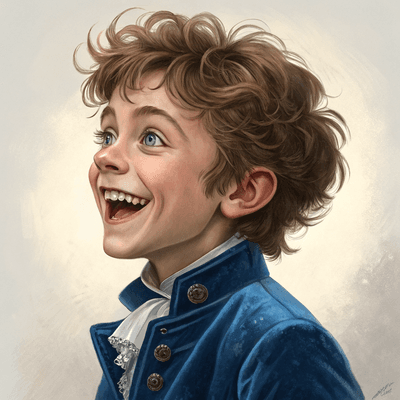
That is me, by the way. I am in this story. And let me tell you, Hoffmann did not do me any favors. In his version, I am kind of a brat. I break things. I boss the toy soldiers around. I am basically written as the kid who gets too rough with his presents and makes the adults sigh.
Fair? Maybe. But also, I was seven. Cut me some slack, Hoffmann.
Anyway. The party is in full swing when Uncle Drosselmeyer arrives. And this is where the story starts getting weird.
Drosselmeyer: Not Your Friendly Uncle
In the ballet, Drosselmeyer is this charming, theatrical guy who shows up with great presents and does magic tricks. The kids love him. The audience loves him. He is basically the cool uncle everyone wishes they had.
In Hoffmann's original? Drosselmeyer is creepy.
Here is how Hoffmann describes him: he wears a patch over one eye, he has no hair, and he builds mechanical toys that are so lifelike they unsettle the children instead of delighting them. When he reveals his Christmas gift -- a miniature castle with tiny mechanical people walking around inside -- the kids are fascinated at first. But then the little mechanical people just keep doing the same thing, over and over, walking the same paths, bowing the same bows, and the kids get bored and then uncomfortable and then the adults put the mechanical castle away in a glass cabinet.
Which, if you think about it, is a pretty sophisticated observation for a story written in 1816. Hoffmann is basically saying: perfect, repeating machines are not as interesting as imperfect, unpredictable real things. Keep that thought. It is going to matter later.
Then Drosselmeyer gives Marie the nutcracker.
The Nutcracker and the Break
Marie loves the nutcracker immediately. Not because it is pretty -- Hoffmann makes it clear that the nutcracker is not pretty. It is a wooden figure with an oversized head, a giant jaw, and a slightly ridiculous expression. But Marie sees something in it. She sees past the wooden exterior to something she cannot quite name.
And then I break it.
Yes, I know. I tried to crack a huge walnut with it, and the jaw snapped. I am not proud of this. In my defense, the whole point of a nutcracker is cracking nuts, and I was just using it for its intended purpose. But Marie was devastated, and she wrapped the nutcracker's jaw with a ribbon from her dress and put it to bed in the toy cabinet.
That night, everything changes.
The Battle
Marie cannot sleep. She sneaks downstairs to check on the nutcracker. And that is when the mice come.
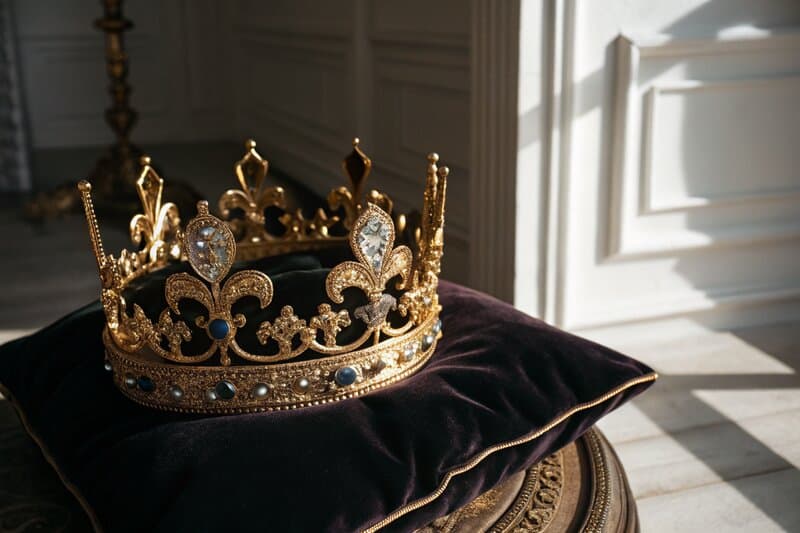
Not one mouse. Not a couple of mice. An ARMY of mice, pouring out from under the furniture, from behind the walls, from everywhere. And leading them is the Mouse King -- and here is the detail that the ballet usually tones down -- the Mouse King has SEVEN HEADS. Each head wears its own tiny crown. Seven heads, seven crowns, one very angry rodent monarch.
The nutcracker comes to life. He leads Marie's toy soldiers -- my toy soldiers, actually, which I am going to need back when this is over -- into battle against the mouse army. The fighting is real. It is violent. Hoffmann does not sugarcoat it. Swords clash. Soldiers fall. The Mouse King and the Nutcracker fight hand to hand (or, I guess, paw to jaw).
And here is the part that always gets me: Marie sees the Nutcracker about to lose. The Mouse King is overpowering him. So Marie does the bravest thing she has ever done -- she takes off her shoe and throws it at the Mouse King.
But she throws too hard, or she loses her balance, or something -- Hoffmann is a little vague here -- and she falls into the glass cabinet and cuts her arm on the broken glass. She passes out from the shock and the blood.
When she wakes up, she is in bed. The mice are gone. The nutcracker is back in the cabinet. And her parents are standing over her, deeply concerned that their daughter was found on the floor in a pile of broken glass, babbling about mouse armies.
The Part Nobody Tells You About
Here is where the story gets REALLY interesting, and it is also the part that the ballet skips entirely.
While Marie is recovering from her injury, Drosselmeyer visits and tells her a story. Not a comforting story. A long, complicated, kind of disturbing story called "The Tale of the Hard Nut." And this story-within-a-story is the key to understanding everything.
Here is the short version:
Once upon a time, there was a beautiful princess named Pirlipat. The Mouse Queen (the mother of the seven-headed Mouse King) cursed the princess, turning her face ugly and grotesque. The only cure was the Krakatuk nut -- the hardest nut in the world -- which had to be cracked by a young man who had never worn boots and had never been shaved.
After years of searching, they found the nut and they found the young man. And guess who the young man was? Drosselmeyer's nephew. A real human being. He cracked the Krakatuk nut, cured the princess, but in the moment of triumph, the Mouse Queen appeared and cursed HIM. He was transformed into... a wooden nutcracker.
Wait, what?
Yes. The nutcracker is not just a toy that comes to life. The nutcracker is a CURSED HUMAN BEING trapped in a wooden body. And the only way to break the curse is for a girl to love him despite his ugly wooden form.
This is the part that makes Hoffmann's story so much deeper than the ballet. The nutcracker is not a fairy tale prince in disguise. He is a real person suffering a real curse. And Marie's love for the nutcracker is not the cute affection a child has for a toy. It is the act of seeing a person when everyone else sees an object.
Marie vs. Everyone
After the battle, Marie tries to tell her parents what happened. The mice, the battle, the nutcracker coming to life -- she tells them everything.
And they do not believe her.
This is the part of the story that Hoffmann cared about the most, and you can tell because he spends a lot of time on it. Marie's parents tell her she was dreaming. They tell her she hit her head. Her father gets genuinely angry and tells her to stop talking about it or there will be consequences. Even I -- Fritz, her brother -- make fun of her. (Again, not my finest moment. I was seven.)
But Marie will not stop. She KNOWS what she saw. The Mouse King was real. The nutcracker is alive. And even though every adult in her life is telling her she is wrong, she refuses to change her story.
Hoffmann was writing about something real here. He was writing about what it is like to be a kid who sees something the adults cannot see, and who has to choose between being believed and being right. Marie chooses to be right. Even when it costs her.
The Mouse King Returns
And then things get even wilder.
The Mouse King -- who, it turns out, survived the battle -- starts visiting Marie at night. He threatens her: give me your candy, or I will bite the nutcracker to pieces. Give me your picture books, or I will destroy him. Give me your dress, or he dies.
Marie keeps giving up her things. Because she loves the nutcracker. Because she believes he is real. Because she is braver than anyone in this story gives her credit for.
Eventually, the nutcracker defeats the Mouse King (with Marie's help -- she gives him a sword from Fritz's toy collection, which, once again, I would like returned). The Mouse King dies, and the nutcracker brings Marie his seven tiny crowns as a trophy.
The Ending Nobody Expects
The nutcracker takes Marie through a magical forest to a world made of candy -- this is the part the ballet DOES use. But in Hoffmann's version, the journey is dreamlike and strange in ways the ballet smooths over. The rivers are made of lemonade and orgeat (an almond syrup). The buildings are made of sugar. The residents are alive and sentient. It is not a place that follows normal rules.
Marie falls asleep and wakes up in her own bed. Again. And again, the adults tell her she was dreaming.
But then -- and this is the part that really gets me -- Drosselmeyer arrives at the house one day with his nephew. A real, flesh-and-blood young man. And the young man whispers to Marie that the curse is broken, that her love for the nutcracker freed him, and he asks her to come with him to be the queen of the Land of Sweets.
Marie says yes.
And here is Hoffmann's final line, which is either beautiful or unsettling depending on how you read it: Marie became the queen of a land where "the most wonderful things could be seen by those who had eyes to see them."
Did she really go to a magical kingdom? Did she marry Drosselmeyer's nephew in the real world? Is the whole thing a metaphor for growing up? Hoffmann never says. He leaves it open, which is the most Hoffmann thing he could possibly do.
Why the Original Is Better (Fight Me)
Look, the ballet is gorgeous. Tchaikovsky's music is incredible. The spectacle is amazing. I am literally a character in it, so I am not going to say it is bad.
But the original story has something the ballet does not: stakes. Real stakes. In the ballet, Clara gets a fun adventure and a pretty dance in the Land of Sweets and then presumably wakes up and it is Christmas morning. In Hoffmann's version, Marie has to fight for what she believes. She gets hurt. She gets punished by her parents. She gives up her possessions to protect someone she loves. And in the end, her reward is not just a trip to a magical land -- it is the vindication of her perception. She was RIGHT. The nutcracker was alive. The mice were real. And the adults were wrong.
That is a powerful message for any kid reading the story. It says: what you see matters. What you believe matters. And sometimes the bravest thing you can do is refuse to let the grown-ups tell you that you did not see what you saw.
Hoffmann was kind of a weird guy. He drank too much. He wrote stories about people going insane. He changed his middle name to "Amadeus" because he loved Mozart that much. He was not, by any standard, a normal children's author.
But he wrote a story that has lasted over two hundred years, been adapted into the most famous ballet ever performed, and still has the power to surprise people who think they already know it.
Pretty cool, right? If you know something even wilder about The Nutcracker, tell us. I bet you can't top that one. (But seriously, try.)