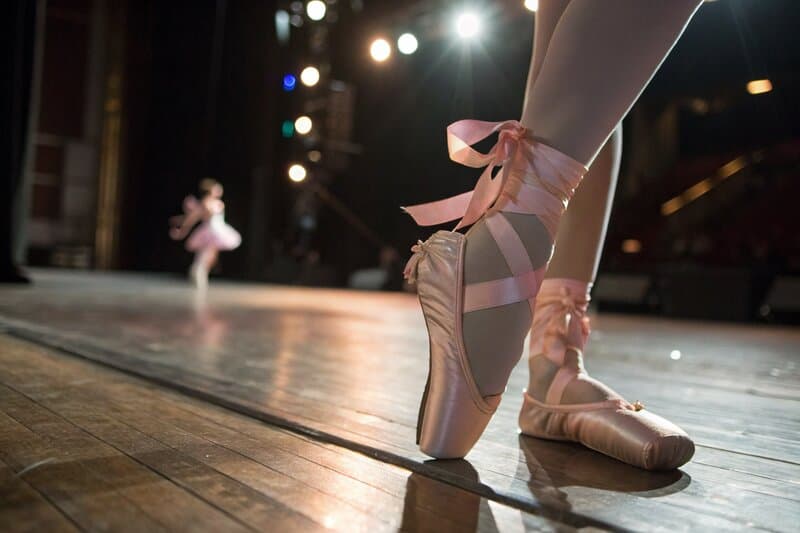
The tutu I wear weighs less than two pounds. It takes between sixty and ninety hours to construct. It contains up to twelve layers of tulle, each cut, gathered, and stitched by hand to a fitted bodice that must move with the body while appearing to exist independently of it -- a structure that is simultaneously attached to the dancer and floating free.
It is, by any measure, one of the most technically demanding garments in the history of costume. And it is, by design, meant to look like nothing at all.
That is the paradox of the classical tutu: the more labor it contains, the less visible the labor should be. The skirt should appear to have materialized from the air. It should hover at the hip like a still surface of water, responding to the dancer's movement with a shiver rather than a flap. If you can see the construction, the construction has failed.
I find this principle beautiful. I also think it deserves to be visible, at least once, before it disappears into the illusion it creates.
The Bodice
A tutu begins with the bodice, and the bodice begins with a fitting.
The bodice of a classical tutu is a boned, structured garment that fits the dancer's torso from just below the collarbone to just below the natural waist. It is constructed on the same principles as historical corsetry, though its purpose is different: a corset reshapes the body, while a tutu bodice supports and reveals it. The dancer's natural line -- the length of her waist, the angle of her shoulders, the ratio of torso to leg -- must be preserved and enhanced, not altered.
The construction typically begins with a pattern drafted from the dancer's measurements. These are not standard measurements. A tutu bodice requires the circumference of the ribcage at four different points, the distance from shoulder to waist on both sides (which are rarely identical), the precise point at which the waist begins to flare into the hip, and the angle of the shoulder blade. In major companies, principal dancers have their own dress forms -- fabric-covered mannequins shaped to their exact bodies -- on which the bodice is built and adjusted without requiring the dancer to stand still for hours.
The bodice shell is cut from a heavy cotton or cotton-polyester blend, reinforced with steel or plastic boning at the seams. The boning provides the rigidity that allows the bodice to support the weight of the skirt without relying on shoulder straps. Most classical tutus are strapless or have only narrow decorative straps; the bodice stays in place through fit alone. It must be tight enough to remain stable during lifts and jumps -- a bodice that shifts during a promenade in the Pas de Deux is a wardrobe failure -- yet not so tight that it restricts breathing or compresses the ribs during sustained passages of movement.
The exterior of the bodice is typically covered in the same fabric as the skirt's decorative layer -- satin, silk, or brocade -- and embellished with the design elements that give each tutu its character. For the Sugar Plum Fairy, the conventional palette is lavender, silver, and crystalline white, though productions vary. Embellishments may include rhinestones, sequins, beadwork, metallic thread, or lace applique. In the most elaborate productions, the bodice decoration alone can require twenty or more hours of hand work.
The Basque
Between the bodice and the skirt is the basque -- a shaped piece of fabric that extends from the waist down over the upper hip, creating a smooth transition from the fitted torso to the projecting skirt. The basque is critical to the tutu's silhouette. Without it, the skirt would appear to sprout directly from the waist, creating a visual break that interrupts the dancer's line. With the basque, the transition is gradual, organic, and structurally sound.
The basque is typically made from the same heavy material as the bodice, boned and shaped to follow the curve of the pelvis. It is the point at which the tutu skirt is attached, and it must distribute the weight of the skirt evenly around the circumference of the hip. An imbalanced basque produces a skirt that tilts -- higher in front, lower in back, or listing to one side -- which is both aesthetically unacceptable and physically distracting for the dancer.
The Skirt
This is where the tutu becomes a feat of engineering.
The classical tutu skirt -- the flat, projecting disc that is the garment's defining visual feature -- is made from multiple layers of tulle, a fine mesh fabric originally produced from silk but now more commonly made from nylon. Each layer is cut in a circle with a central hole that fits around the basque. The diameter of the circle determines the projection of the skirt -- how far it extends from the dancer's body. For a classical tutu, this projection is typically between thirty and forty centimeters on all sides.
The layers are not identical. The bottom layer -- the one closest to the dancer's legs -- is the fullest and the stiffest. It provides the structural support that holds the entire skirt in its characteristic flat shape. Each successive layer above it is slightly less full and slightly softer, creating a graduated stack that is rigid at the base and delicate at the top. The topmost layer -- the one the audience sees -- is the softest of all, often made from a finer grade of tulle or from a different fabric entirely, such as silk organza.
The gathering is the most labor-intensive step. Each layer of tulle must be gathered by hand to fit the circumference of the basque. The gathering ratio varies by layer -- the bottom layers may be gathered at a ratio of three or four to one (three meters of tulle gathered into one meter of waistband), while the upper layers use a lower ratio for a smoother finish. The gathering must be absolutely even. Any irregularity -- a clump here, a gap there -- will produce a bump in the skirt that catches the light and breaks the illusion of uniformity.
Once gathered, each layer is stitched to the basque. In traditional construction, this stitching is done by hand, with small, firm stitches that secure the gathered tulle without crushing it. Machine stitching is faster but produces a flatter, less resilient attachment. The best tutus are hand-stitched throughout.
After all layers are attached, the skirt is "tacked" -- individual layers are stitched together at intervals around the circumference to prevent them from separating during movement. The tacking must be firm enough to maintain the skirt's structure but loose enough to allow the layers to respond independently to the dancer's motion. This is the quality that gives a well-made tutu its life: when the dancer turns, the layers do not move as a single unit. They ripple, each responding to the air with a fractional delay, producing a shimmer that is one of the most beautiful effects in all of costume.
The Decoration
The Sugar Plum Fairy's tutu is, by convention, among the most elaborately decorated costumes in The Nutcracker. The character's association with crystalline sound, jewel-like beauty, and the otherworldly atmosphere of the Land of Sweets invites a level of embellishment that more restrained roles do not.
The decorative elements are applied to the topmost layer of the skirt and the bodice, usually after the structural construction is complete. Rhinestones are set individually -- in major productions, Swarovski crystals are preferred for their light refraction, which produces visible sparkle even under soft stage lighting. A single tutu may contain several hundred rhinestones, each applied with heat-set adhesive or sewn through the tulle with invisible thread.
Sequins, if used, are sewn in patterns -- concentric circles radiating from the center of the skirt, scattered clusters that simulate scattered light, or structured motifs such as snowflakes or stars. Metallic threads may be couched (laid on the surface and stitched down) in scrollwork or filigree patterns. Lace appliques, if the design calls for them, are cut from larger pieces of lace, shaped, and stitched to the tulle with meticulous attention to the way the lace pattern integrates with the tulle's own mesh.
All of this is done by hand. All of it is done with the understanding that the audience will see it only from a distance, under stage lighting, in motion. The craftsperson must think not in terms of close-up beauty but in terms of theatrical effect: will this rhinestone catch light from the front? Will this sequin pattern read from the balcony? Will this embellishment add weight that changes the way the skirt moves?
The Fitting
When the tutu is complete, there is a final fitting -- and it is not merely a matter of checking size. The dancer puts on the tutu and moves in it: walks, turns, bends, jumps. She performs selections from her choreography, testing whether the bodice stays in place during lifts, whether the skirt's projection clears her partner's hands during the promenade, whether the weight is distributed evenly enough that she does not feel the garment pulling in any direction.
Adjustments are made in real time. A tack is added here. A layer is shortened there. A rhinestone that catches on the partner's jacket is removed and repositioned. The process is collaborative -- the dancer, the costumer, and sometimes the ballet master are all present, each observing from a different perspective. The dancer feels the costume. The costumer sees the construction. The ballet master sees the stage picture.
When everyone is satisfied, the tutu is hung in the costume shop on a specially shaped hanger that preserves its structure. The skirt is covered with a muslin drape to protect the tulle from snagging. It will hang there until performance day, when it will be brought to the dressing room, checked one final time, and put on the dancer who will give it its two hours of life.
What the Audience Sees
The audience sees none of this. They see a woman in a beautiful costume who appears to float. The tutu is not a character. It is not a spectacle. It is an absence -- the absence of weight, the absence of effort, the absence of the ninety hours that went into making it look like nothing.
And that is exactly right. The tutu is not meant to be admired in isolation. It is meant to serve the dancer and the choreography and the music. It is meant to extend the dancer's line, to catch the light as she turns, to respond to the air as she moves through it. It is a tool -- the most beautiful, most labor-intensive, most painstakingly constructed tool in the performing arts.
I wear it with the respect it deserves. Which means I do not think about it at all once the music begins. The bodice holds. The skirt shimmers. The construction vanishes into the performance it was built to serve.
Sixty to ninety hours of handwork, disappearing into two hours of dance. That is not waste. That is craft at its highest expression -- the point at which the made thing becomes invisible, and only the art remains.
The performance ends. The lights rise. But if you were truly watching -- truly listening -- something has changed in you. That is not entertainment. That is art.