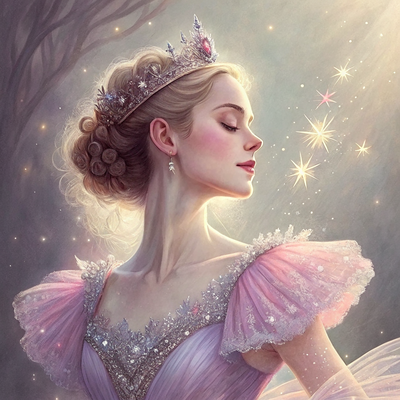
When Tchaikovsky scored the Dance of the Sugar Plum Fairy, he gave the melody to an instrument most of his audience had never heard. That was precisely the point.
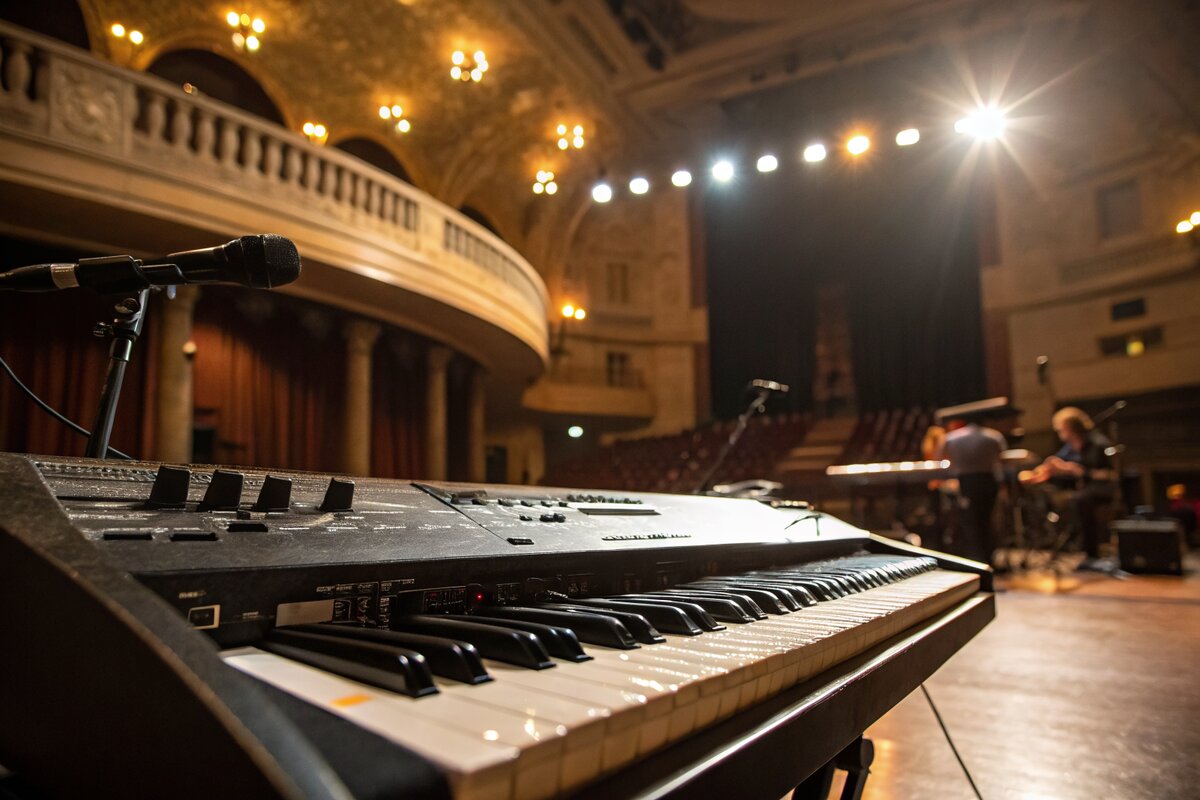
The instrument was the celesta, and in 1892 it was barely a decade old. Invented by Auguste Mustel in Paris, it resembled a small upright piano, but instead of hammers striking strings, its mechanism struck metal plates suspended over wooden resonators. The sound it produced was unlike anything in the orchestral vocabulary -- crystalline, bell-like, luminous, as if someone had found a way to make starlight audible.
Tchaikovsky encountered the celesta during a visit to Paris in 1891. He was immediately captivated. In a letter to his publisher, Pyotr Jurgenson, he wrote with the conspiratorial glee of a man who has found a secret weapon:
"I have discovered a new orchestral instrument in Paris, something between a small piano and a glockenspiel, with a divinely beautiful tone. I want to use it in my new ballet. But please -- I beg of you -- do not show it to anyone, because I am afraid that Rimsky-Korsakov and Glazunov will hear of it and use it before me."
There is something delightful about this -- one of the greatest composers in history, worried that his colleagues will steal his toy. But beneath the playfulness, Tchaikovsky understood something essential about the role he was scoring. The Sugar Plum Fairy needed to sound like nothing the audience had ever experienced. She needed to exist, sonically, in a realm apart.
He chose well.
Anatomy of Two Minutes
The Dance of the Sugar Plum Fairy lasts approximately two minutes in most performances. In those two minutes, Tchaikovsky's Nutcracker Suite achieves something remarkable: it creates one of the most recognizable melodies in Western music using an instrument that, even today, most people cannot name.
Let us examine what he actually wrote.
The piece opens with four bars of pizzicato strings -- plucked rather than bowed, producing a dry, precise texture that is the sonic equivalent of tiptoeing. This is not accompaniment in the traditional sense. It is architecture. Tchaikovsky is building the room before the guest arrives.
Then the celesta enters.
The melody is in B-flat minor, which gives it an inherent quality of wistfulness -- not quite melancholy, but aware of something fragile. The celesta plays a descending figure in the right hand while the left hand provides a gentle counterpoint. The dynamic marking is pianissimo. This music does not announce itself. It arrives.
What makes the melody so effective, from a compositional standpoint, is its restraint. The celesta has a limited dynamic range -- it cannot crescendo the way a violin can, cannot sustain a note the way an oboe can. Tchaikovsky, who was above all a masterful orchestrator, turned this limitation into an aesthetic principle. The Sugar Plum Fairy's music is delicate because the instrument demands it. The fragility is not a choice. It is a condition.
Around the celesta, the orchestra provides the most gossamer accompaniment in the entire ballet. Bass clarinet offers a low, reedy foundation. Pizzicato strings continue their precise plucking. There is no brass. No percussion aside from the celesta itself. Tchaikovsky strips the orchestra down to its most transparent textures, creating negative space that allows the celesta to shimmer.
This is the work of a composer who understood that power, in music, is not always volume. Sometimes it is the act of taking everything away except the essential.
The Context Within the Score
To fully appreciate the Dance of the Sugar Plum Fairy, one must hear it in context. It does not exist in isolation -- it arrives at a specific moment in the ballet's narrative arc, and its placement is as deliberate as its orchestration.
Act II of The Nutcracker is a divertissement -- a suite of character dances performed as entertainment in the Land of Sweets. The audience has just experienced the exuberant Spanish Dance, the languid Arabian Dance, the explosive Chinese Dance, the rollicking Russian Dance, and the pastoral Dance of the Mirlitons. Each is vivid, each is distinctly colored, and each is, to varying degrees, loud.
Then the stage clears. The ensemble retreats. And a single figure appears.
Tchaikovsky understood that after a sequence of stimulation, the audience craves something opposite. The Sugar Plum Fairy's dance functions as a palate cleanser, a reset, a breath. But it is also the emotional climax of Act II -- the moment when the hostess of the Land of Sweets reveals herself not as a spectacle but as a presence.
This structural intelligence is often underappreciated. Critics who dismiss The Nutcracker as mere holiday entertainment overlook the sophistication of its architecture. The score is not a collection of pleasant melodies. It is a carefully sequenced emotional journey, and the Sugar Plum Fairy's dance is its pivot point -- the moment when spectacle gives way to intimacy.
Famous Interpretations
The dance has been interpreted by some of the finest ballerinas in history, and each has brought something different to its two minutes.
Galina Ulanova, dancing with the Kirov Ballet in the 1930s and 1940s, brought an almost austere quality to the role -- her Sugar Plum Fairy was regal rather than sweet, commanding rather than inviting. She danced the music's precision rather than its prettiness, and the result was a performance that felt carved from marble.
By contrast, Gelsey Kirkland, partnering with Mikhail Baryshnikov in the American Ballet Theatre's celebrated 1977 television production, found warmth and vulnerability in the role. Her Sugar Plum Fairy seemed genuinely delighted by Clara's arrival -- a hostess who was not performing hospitality but feeling it. Kirkland's musicality was exquisite; she found micro-pauses in the celesta's phrasing that other dancers glide past.
More recently, Wendy Whelan's interpretation with the New York City Ballet demonstrated that the role can accommodate complexity. Whelan's Sugar Plum Fairy had an edge of melancholy -- a queen who knows her kingdom is a dream and that dreams end. It was a controversial reading. I found it magnificent.
Each interpretation reveals something new in the music. That is the mark of a great score: it is capacious enough to contain multiple truths.
The Celesta's Legacy
Tchaikovsky's gamble with the celesta paid dividends far beyond The Nutcracker. The instrument's success in the ballet introduced it to the orchestral mainstream. Gustav Mahler used it in his Sixth Symphony. Bela Bartok featured it prominently in his Music for Strings, Percussion and Celesta. John Williams would later employ it in the "Hedwig's Theme" from the Harry Potter films -- another piece of music designed to evoke a world that is magical, fragile, and just out of reach.
But the celesta's most famous moment remains this one: two minutes in a Christmas ballet, written by a composer who thought the whole project was beneath him.
There is a lesson in that, I think. Tchaikovsky approached The Nutcracker as an obligation. The commission came from Ivan Vsevolozhsky, the director of the Imperial Theatres, and Marius Petipa, who provided a detailed scenario with metronomic instructions that Tchaikovsky found stifling. "It is infinitely worse than Sleeping Beauty," he wrote in a letter that has been quoted so often it has become a kind of ironic motto for the entire enterprise.
And yet. When it came time to score the Sugar Plum Fairy's entrance, Tchaikovsky did not phone it in. He traveled to Paris, discovered an instrument, swore his publisher to secrecy, and composed a melody so perfectly suited to its timbre that the two -- instrument and theme -- have become inseparable in the cultural imagination.
You do not do that if you do not care. You do that if, despite your protests, the music has gotten under your skin.
Hearing It Again for the First Time
I offer this suggestion to anyone who has heard the Dance of the Sugar Plum Fairy so many times it has become sonic wallpaper -- a familiar jingle associated with Christmas commercials and department store soundtracks.
Go to a live performance. Sit close enough to see the orchestra pit. Watch the celesta player's hands. They are performing on an instrument that looks like a toy piano, and from it comes a sound that has defined an entire character, an entire scene, an entire season, for over a century.
Listen to the pizzicato strings underneath. Count them -- each pluck is placed with surgical precision, and in a good orchestra, the timing is breathtaking. Listen to the bass clarinet, providing its low, woody foundation. Listen to the spaces between the notes, which are as composed as the notes themselves.
And then watch the dancer.
Watch how she translates that crystalline sound into movement. The bourrees on pointe -- those tiny, rapid steps that make a ballerina appear to glide rather than walk. The port de bras -- the carriage of the arms, which in this dance should feel like the physical equivalent of the celesta's sustain: a gesture that extends beyond its initiation, that lingers in the air the way the instrument's overtones linger in the ear.
Two minutes. A melody most people can hum. An instrument most people cannot name. A character who has no lines, no backstory, no dramatic arc -- and yet she is, in the collective imagination, more vivid than most characters with all three.
That is what music can do when a composer, however reluctantly, gives it everything he has.
The performance ends. The lights rise. But if you were truly watching -- truly listening -- something has changed in you. That is not entertainment. That is art.