Why Every Production Ends Differently

The Messenger · 2026-04-05
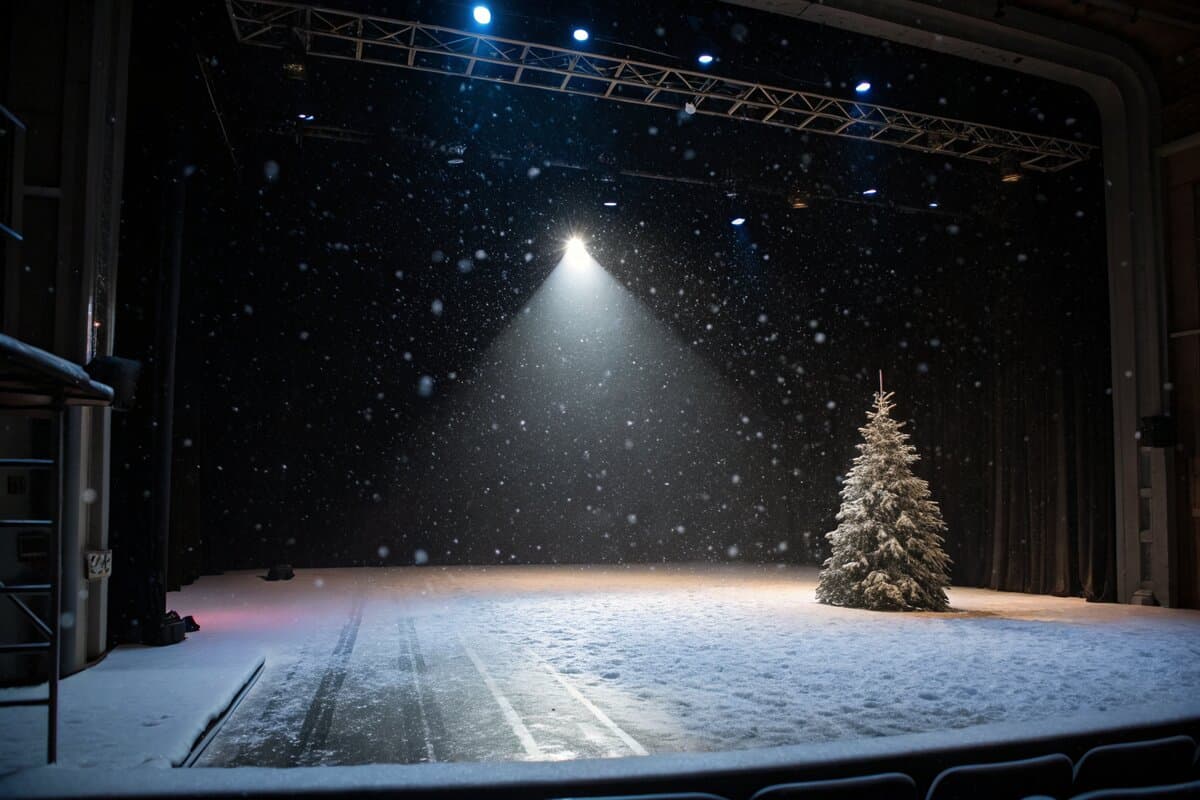
The curtain falls.
But before it falls, something must happen to Clara. She must go somewhere. She must return, or not return. She must wake, or choose not to. She must be given an ending, and the ending must mean something -- not just to the story but to every person in the audience who has spent two hours inside her journey and needs to know what it was for.
This is the problem. And every production of The Nutcracker solves it differently.
The Original Ambiguity
Hoffmann, who started all of this, did not make things easy.
In his 1816 story, "The Nutcracker and the Mouse King," the question of dream versus reality is deliberately, almost aggressively unresolved. Marie -- the original Clara -- experiences the battle with the mice, the journey through the snow, and the arrival at the Land of Sweets. Her parents tell her it was a fever dream. She insists it was real. Her godfather Drosselmeyer eventually reveals that the Nutcracker is his nephew, transformed by a curse. Marie declares her love for the wooden figure. And then -- in one of the stranger endings in 19th-century children's literature -- Drosselmeyer's nephew appears in person, thanks Marie for breaking the curse, and takes her away to be queen of the Land of Sweets.
Hoffmann presents this as actually happening. Marie leaves. She goes to a kingdom made of candy and becomes its queen. Her parents, presumably, are left with an empty bedroom and a number of questions.
The ending is unsettling in a way that Hoffmann clearly intended. Is it a happy ending? Marie gets the prince and the kingdom. But she also leaves behind everything real -- her family, her home, her ordinary life. The Land of Sweets is a paradise, but it is also an exile. Hoffmann, who spent his life writing about the tension between the rational world and the world of imagination, would not have missed the darkness in his own conclusion.
Alexandre Dumas, who adapted Hoffmann's story into French in 1844 -- the version that became the basis for the ballet -- softened this considerably. In Dumas's telling, the departure is less abrupt, less final, less troubling. But the fundamental question remains: does the child leave or stay? Is the dream over, or does she choose to live inside it?
The ballet, when it premiered at the Mariinsky Theatre in 1892 with choreography by Lev Ivanov and a scenario by Marius Petipa, did not fully resolve the question either. The original staging ended with the grand pas de deux and the final waltz of Act II -- a celebration in the Land of Sweets that simply concludes, without a clear scene showing Clara's return home. The curtain fell on spectacle, not on narrative closure.
This lack of a definitive ending is not a flaw. It is a gift. It means that every choreographer, every director, every artistic team that mounts a Nutcracker must decide for themselves: what happens to Clara?
The Dream Ending
The most common approach in American productions is the dream ending. Clara wakes up.
The mechanics vary. In some versions, after the grand pas de deux and the final celebration, the lights fade on the Land of Sweets and rise on the Stahlbaum parlor. Clara is found asleep under the Christmas tree, the nutcracker in her arms. She blinks. She looks around. The room is ordinary. The party is over. The candles are burned down. Was it real?
George Balanchine's NYCB production uses a version of this. After the celebration in the Land of Sweets, Clara and the Nutcracker Prince ride off in a reindeer-drawn sleigh -- a magical departure that does not show a return but implies, through its fairy-tale imagery, that the journey is ending. The final image is the sleigh ascending into falling snow. It is an ending that evokes departure without insisting on it.
The dream ending is comforting. It tells the audience: this was a fantasy, a beautiful parenthesis in ordinary life, and ordinary life resumes. The child is safe. The family is intact. Christmas morning will come, and the presents will be there, and the nutcracker will be on the shelf where it was left.
But the dream ending also diminishes something. If it was all a dream, then nothing was at stake. Clara's bravery in the battle scene was not bravery -- it was the involuntary theater of sleep. Her love for the Nutcracker was not a choice -- it was a neural event. The entire adventure is bracketed by quotation marks, and quotation marks, as any writer knows, are a way of keeping something at a distance.
The Transformation Ending
Some productions choose to let the dream be real -- or at least to leave the door open.
In the Royal Ballet's production, staged by Peter Wright and first performed in 1984, the ending includes a return to the parlor scene, but with a crucial addition: Drosselmeyer appears and presents Clara with the Nutcracker Prince in human form -- his nephew. The implication is that the adventure was real, the transformation was real, and the prince exists in Clara's waking world. The two meet eyes. The curtain falls on possibility.
This ending is romantic in both senses of the word -- it offers a love story, and it sides with the Romantic philosophical tradition that values imagination as a form of truth. The dream was not a dream. What Clara saw was real. The world contains magic if you are willing to see it.
The transformation ending carries more emotional weight but also more risk. If the prince is real, then Clara's story extends beyond the curtain, and the audience must grapple with implications the dream ending avoids. What does it mean for a child to fall in love with a figure from a dream? What does it mean for a dream figure to materialize in the waking world? The transformation ending opens questions it does not answer, which is either its greatest strength or its most significant weakness, depending on how comfortable you are with ambiguity.
The Departure
A smaller number of productions take Hoffmann at his word. Clara leaves.
In some European stagings, particularly those influenced by the darker German and Russian traditions, the ending shows Clara departing with the Prince to the Land of Sweets -- not as a visitor but as a permanent resident. She does not wake up. She does not return to the parlor. The sleigh does not circle back. She goes, and the final image is not the Stahlbaum house but the glittering kingdom that exists on the other side of the snow.
This ending is rare in American productions, which tend to favor reassurance over ambiguity. But when it is done well, it is devastating. It honors Hoffmann's original vision of a story about the cost of imagination -- about a girl who sees beyond the visible world and, in seeing, crosses a threshold she cannot uncross.
The departure ending asks the audience to sit with loss. Not the loss of Clara, exactly, but the loss of the ordinary world that Clara chooses to leave behind. The parents who will wake to find her gone. The bedroom that will remain empty. The nutcracker that is no longer on the shelf because the nutcracker has become something else, and the girl who loved him has followed.
It is an ending that children rarely see, because it is an ending that does not reassure. It says: magic has consequences. Love has a price. The most beautiful journey you can take may be one you do not return from.
The Ambiguous Ending
And then there are the productions that refuse to choose.
Mark Morris's The Hard Nut (1991), which transplants the story to a 1970s American suburb, ends with a deliberate refusal to resolve the dream-or-reality question. The final scene is ambiguous, playful, slightly disorienting -- consistent with Morris's overall approach, which treats the Nutcracker source material with affectionate irreverence.
Alexei Ratmansky's production for American Ballet Theatre, which premiered in 2010 with designs based on original 1892 sketches, returns to the Mariinsky's earliest approach: the ballet ends in the Land of Sweets without showing a return. The audience is left in paradise, and the question of what happens next is left entirely to them. Ratmansky, who grew up in the Soviet ballet tradition and was deeply familiar with the Nutcracker's Russian roots, spoke of wanting to honor the "openness" of the original staging -- the idea that the ending is not the choreographer's to dictate but the audience's to imagine.
The ambiguous ending is, in some ways, the most honest. It acknowledges that the story's power lies precisely in its unresolvedness. Was it a dream? The ballet does not know. Does Clara go home? The ballet does not say. Is the prince real? The ballet offers no evidence either way.
What the ballet offers instead is a final waltz, a final tableau, a final image of light and color and movement -- and then the curtain falls, and the question lands in your lap.
Why It Matters
It matters because the ending you see shapes the meaning of everything that came before.
If Clara wakes up, then the ballet is about the richness of childhood imagination -- a beautiful dream that enriches but does not alter the dreamer's life. This is a gentle reading, suitable for very young audiences, and there is nothing wrong with it.
If Clara meets the prince in the waking world, then the ballet is about the intersection of imagination and reality -- about seeing through surfaces to the truth beneath. This is Hoffmann's theme, refracted through a softer lens, and it gives the ballet philosophical weight.
If Clara departs, then the ballet is about transcendence -- about a world beyond this one that is accessible only to those brave enough to leave the familiar behind. This is the most radical reading, and the most costly.
If the ending is ambiguous, then the ballet is about the limits of knowledge -- about beauty that cannot be explained, classified, or resolved. This is perhaps the most modern reading, and the one that asks the most of the audience.
Each of these is a valid interpretation of the same music, the same choreography, the same story. Tchaikovsky's score, remarkably, supports all of them. The final measures of the ballet -- a sweeping orchestral crescendo followed by a sudden, clean silence -- can sound triumphant, wistful, mysterious, or final, depending on what the staging has prepared the audience to feel.
What I Have Seen
I have watched Clara wake up in a sunlit parlor, rubbing her eyes, the nutcracker in the crook of her arm. The audience sighed. It was sweet.
I have watched Clara ride away in a sleigh through falling snow, the prince beside her, the stage growing dark behind them. The audience held its breath. It was beautiful.
I have watched Clara simply stand in the Land of Sweets as the lights dimmed -- not leaving, not staying, just existing in a place that might be real, holding the hand of someone who might be a prince, while the music ended and the curtain fell and the question remained.
No one sighed. No one held their breath. They sat for a moment in the dark, each of them holding a different ending in their mind, each ending true, each ending incomplete.
That is the secret of The Nutcracker's ending. It does not have one. It has a hundred. A thousand. One for every production, and one for every person who watches a production and decides, in the privacy of the dark, what happened to the girl.
She woke up. She stayed. She left. She is still deciding.
The curtain falls. The choice is yours. The snow has stopped, or it has not. The dream is over, or it was never a dream.
Somewhere, on some stage, the final waltz is playing. And Clara is standing in the light, waiting to see what you will make of her.